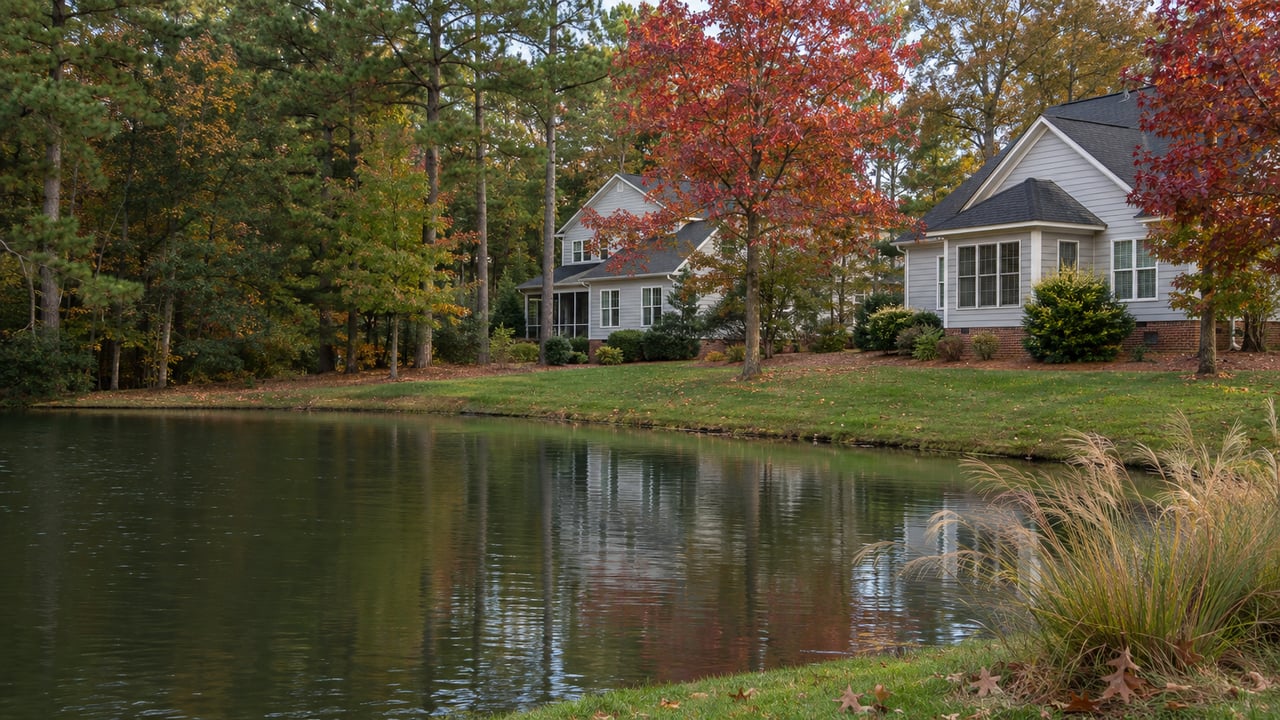
Along N.C. 42 East, the price sheets cover a wide range. Townhomes at North District at Flowers Plantation are listed from $329,000 to $400,000. A few miles of the same master plan away, Watson at Flowers Plantation lists wooded homesites of around an acre with homes from $859,000. All of it is already on the market. On the county side of the jurisdiction line, the rules for whatever gets proposed next are being rewritten.
On county-governed land around Clayton, what can be built in the field behind a new home depends on a Johnston County ordinance that commissioners could vote on Nov. 16. Under the latest draft, a subdivision of 19 or more lots would need a vote by the Board of Commissioners. It would also need a finding that existing or planned public water and/or sewer capacity can serve it, or that the needed improvements will arrive before or alongside construction. The county's own utility timeline puts its next big jump in water capacity at 2031.
What is on the price sheets right now
Today's inventory around Clayton spans a wide range of prices and lot sizes, and builders are pairing it with financing offers. Here is what several builders were listing heading into November 2026:
| Community | Builder | Listed price | What the listing highlights |
|---|---|---|---|
| North District at Flowers Plantation | True Homes | $329,000 to $400,000 | Townhomes; rate lock up to 120 days with no upfront fee, extendable to 180 days, subject to lender requirements |
| South Lake Townes at Flowers Plantation | Caruso Homes | From $339,900 | 4-bedroom townhomes; advertised "rate drop" to 5.25% on select homes |
| McAlister Creek | Mattamy Homes | $374,900 to $447,900 by floorplan | 48 homesites, six floorplans |
| Creekside | New Home Inc. | From $384,700 | Listed in Clayton |
| Cattail | New Home Inc. | From $499,700 | Lake-and-pool community |
| High Springs | Eastwood Homes | From the mid-$500,000s | Lots from nearly one acre to three acres |
| Watson at Flowers Plantation | Fischer Homes | $859,000 to $1M+ | Wooded homesites around one acre |
Rate offers on new construction mean builders are competing for buyers, and that competition comes from supply that has already been approved. Statewide, the NC REALTORS September 2026 housing report showed 5.93 months of inventory, inventory up 3.5% year over year and closed sales down 11%. Buyers across North Carolina had more room in September than they did a year earlier.
Some of these communities also sit outside any town's tax rolls. Flowers Plantation describes itself as a 3,000-acre community in Johnston County and advertises "NO CITY TAXES." Inside the Town of Clayton, the adopted FY 2026-2027 budget keeps the property tax rate at $0.49 per $100 of assessed value and raises water and sewer rates by a combined average of 8.3%. That jurisdiction line is the same one that decides whose development rules apply.
Who would sign off on the next subdivision
The county's draft Unified Development Ordinance covers subdivisions outside municipal limits and extraterritorial jurisdictions. Inside a town, it applies only if that town's governing body agrees to it by resolution. Jurisdiction follows the parcel, not the mailing address. A "Clayton" listing can fall under either set of rules.
For parcels under county rules, the JoCo Report reported that the original proposal would have let the Planning Director approve major subdivision plats administratively once they met county standards. The Oct. 15 draft sorts them by size instead:
- Three or fewer lots go to the Planning Director.
- Four to 18 lots go to the Planning Board.
- Nineteen or more lots go to the Board of County Commissioners.
The JoCo Report wrote that this gives appointed and elected boards "a much larger role in deciding where new residential development occurs." For someone who already owns a new home next to undeveloped land, this matters in a practical way. A large subdivision proposal next door would go on a board's agenda, and a buyer could follow it there.
The water test behind the vote
Under the draft, a board vote alone is not enough to approve a subdivision. The Version 4 text of Article D lists the findings the Planning Board or commissioners must make. Among them, the subdivision must be adequately served by existing or planned infrastructure, or the applicant must show that the needed improvements will come before or alongside development, as shown by:
"Sufficient capacity in the public water and/or sewer system to serve the proposed lots; A transportation network with adequate capacity and design to accommodate traffic generated by the subdivision; and Adequate emergency service access"
The county's timeline gives that test real weight. At their Oct. 5 meeting, commissioners advanced a new water supply intake on the Neuse River and a new water treatment plant near Princeton. Public Utilities Director Chandra Farmer said the plan would have both online in 2031, the year the county expects to need new capacity to meet peak daily demand. The full project, including intake, plant and transmission lines, would cost about $736 million. According to the JoCo Report's Oct. 22 coverage, the plant would start at 6 million gallons per day and could expand to 30 million. It would draw from the Neuse when river flow is above 198 cubic feet per second and from a county-owned quarry holding more than 800 million gallons when flow drops below that.
Sewer already runs on its own queue. The county's water and sewer policy allocates wastewater capacity for qualifying residential developments from surplus treatment-plant capacity, first come, first served, phase by phase.
Taken together, today's offers are on homes already being sold. Under the draft, the next subdivision of four or more lots on county-governed land near Clayton would go to a board vote with a capacity finding, and the county itself dates its next major water expansion to 2031. The proposal is still in progress, and county staff told the Planning Board that some infrastructure-capacity standards could be handled through county policy instead of the ordinance.
What would change at the edge of a farm field
The draft also covers the farmland that still surrounds much of the area. The original proposal called for setbacks from agricultural property ranging from 75 feet for residential projects to as much as 300 feet for industrial ones. The Oct. 15 version limits the special agricultural buffer to new residential development next to an active agricultural use. Developers could choose among options ranging from a 10-foot, heavily screened buffer with a solid fence or wall to a 50-foot natural or open-space buffer. At the Oct. 26 hearing, county staff clarified that the options are 10, 30 and 50 feet.
In August, commissioners kept a 30,000-square-foot minimum in rural areas and kept 40,000 square feet in environmentally sensitive areas and water supply watersheds. The county noted that North Carolina bars local governments from downzoning, so a looser rule could be hard to undo. The draft drops three proposed rural districts: Agricultural, Agricultural Estate and Estate Residential. Those would have allowed between one home per acre and one per five acres.
Some nearby land is leaving the development pipeline for good. The Johnston Soil and Water Conservation District reported about 1,100 acres that will stay in agricultural use permanently, counting completed easements and those fully funded and awaiting closing.
Projects already approved are handled by vesting rules. Article A of the draft ties a vested right to an approved site-specific plan when the applicant requests it in writing at the time of application, and the right generally lasts two years. The approving body can extend it to as long as five years based on factors such as phasing, investment and market conditions. This post is general information and not legal advice. How any of these rules applies to a specific parcel is a question for the county planning department or a real estate attorney.
Where the vote stands this week
On Oct. 26, the Johnston County Planning Board voted unanimously to recommend denial of the draft, finding it inconsistent with the comprehensive land-use plan on rural character, agriculture and forestry, open space and coordinated development. The recommendation is advisory. The county posted a recording of the hearing. The commissioners' own public hearing was set for 6 p.m. Nov. 2 at the courthouse in Smithfield, and they could vote on adoption at their Nov. 16 meeting. If adopted, the ordinance would replace the county's existing development regulations. The full draft is posted on the county's UDO information page.
Commissioners have also approved public facilities that follow growth. On Oct. 19, they approved North Side Fire Rescue's third station at 4370 N.C. 42 East in Flowers Plantation. It is planned at about 12,500 square feet and about $4 million, with three drive-through bays and room for an EMS crew if a study finds the area needs one.
FAQ
Does the county ordinance apply to homes inside Clayton's town limits? The draft's subdivision rules apply outside municipal limits and extraterritorial jurisdictions, and inside a town only if its governing body adopts them by resolution. Whether a listing falls under town or county rules depends on the parcel.
Would a builder's current incentive be affected by the vote? The offers in the table are builder programs on homes already being sold. The ordinance governs future subdivision approvals. Incentive terms come from each builder and lender.
When would the new water plant come online? The county's stated target for the Neuse River intake and the Princeton-area treatment plant is 2031.
If you're comparing new construction around Clayton, ask two questions about any lot before you sign. First, which jurisdiction governs the land next to it? Second, what is already approved on that land? The Property Shop Real Estate Co. can help you check both for a specific home, pull county records on the parcels nearby, and weigh this month's builder incentives against what is likely to be built around you.